Festival Public Display
Who uses this?
This page describes what patrons see once a festival is active. Box Office Managers control it through the festival's status, artwork, descriptions, and landing page settings.
Navigation: Options > Festivals (configuration) -- the display itself appears on the public box office page, the website's now-playing section, the landing page, and confirmation emails
The Box Office Callout
On the public box office page, an active festival's shows never appear as scattered individual cards. Instead the festival gets one branded callout -- artwork on the left; the festival name, dates, description, and a compact grid of every upcoming member show on the right.
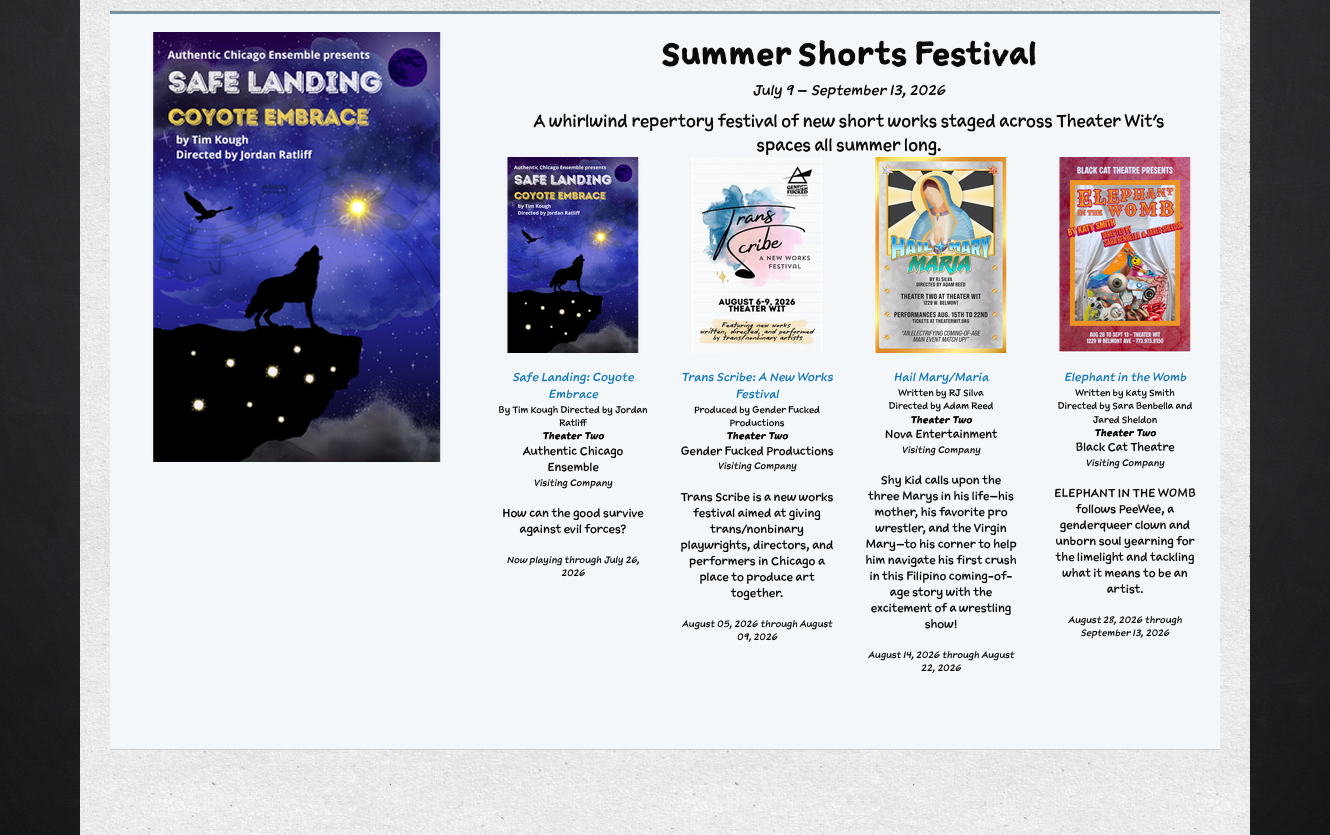
How the callout is placed:
- It appears once per page, in the earliest section where the festival has a show -- Now Playing wins over Coming Soon. All of the festival's upcoming shows are listed inside it, even ones that would otherwise fall in a later section.
- In Later This Season, the festival never gets a full callout. A festival whose shows are all that far out is represented by its artwork alone, linking to the landing page when one is enabled.
- Each callout carries an anchor (
#festival-<id>) so email and external links can jump straight to it.
The single-show rule
A festival earns the callout only while it has two or more upcoming shows. Once a single show remains, that show renders as a normal production card in whatever section it belongs, with a "Part of the {Festival Name}" line after its dates. The same rule applies everywhere festivals group shows.
The Embedded Now-Playing Section
The theater website embeds Stagemgr's now-playing section. There, the festival renders as a tile the same size and style as the production thumbs: the artwork as the image, "Festival" where a show's venue name would be, the name linking to the landing page (or to the box office callout when no landing page exists), the short description, and a "N shows · date range" line.
While a festival holds a venue's stage, that venue contributes no thumb of its own -- the festival tile carries that stretch of programming. Once the festival's final show at the venue closes, the venue's next regular show resumes the slot.
The Landing Page
When Enable public landing page is checked (and a URL name is set), the festival gets its own public page at /festivals/<url name>:
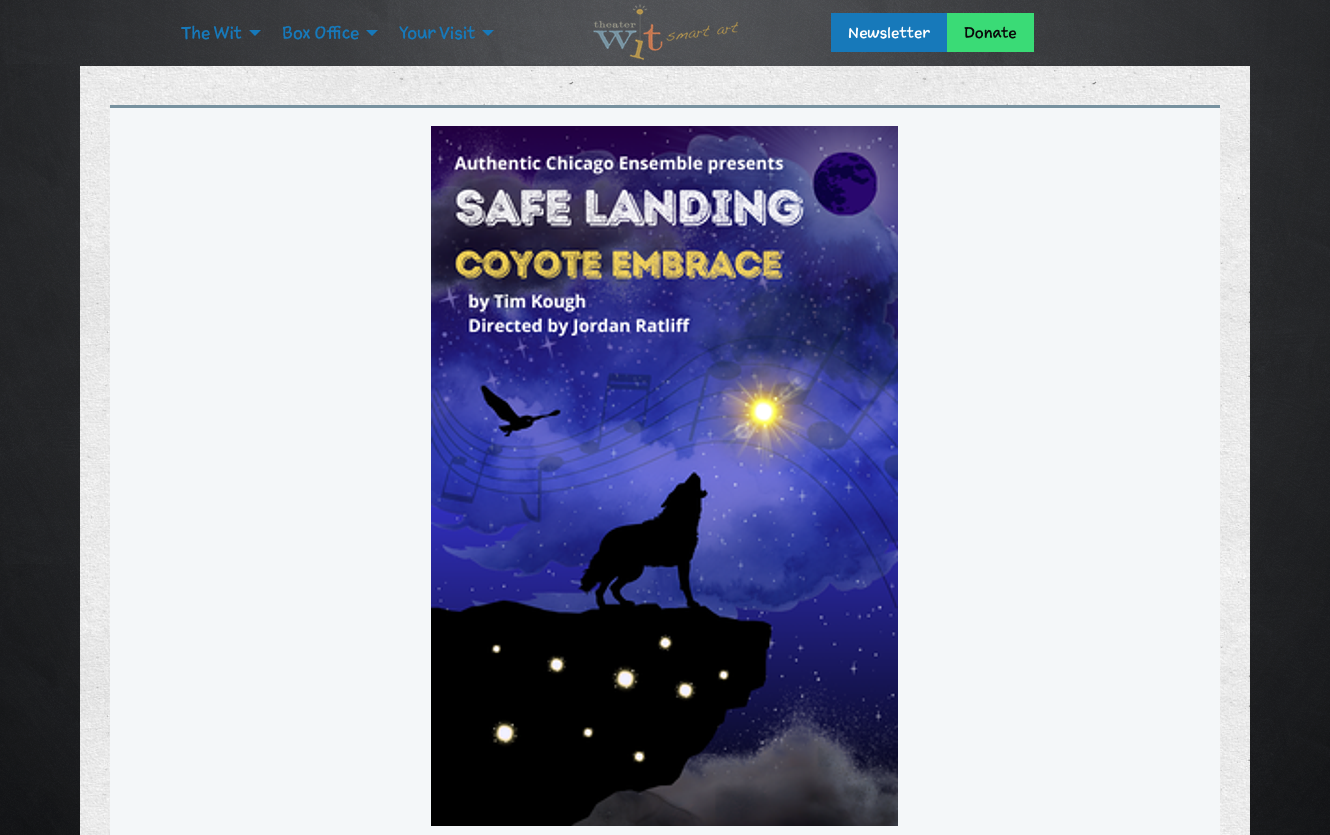
The landing page includes:
- A hero with the festival artwork, name, derived date range, and full description.
- A festival pass callout above the show list whenever the festival has a flex pass on sale to the public -- a purchase button with the pass name and price, plus an invitation to buy individual tickets below.
- Cards for every visible, publicly sellable member show, linking to their performance calendars.
The landing page requires an Active festival
The page returns a 404 (page unavailable) unless the festival is Active and the landing page is enabled. The admin festival page links the full URL so you can verify it before publicizing.
Confirmation Emails
The "Also playing" section of order confirmation emails promotes a few other current shows at random. An active festival occupies exactly one slot in that rotation -- its artwork, name, short description, and show count with dates -- rather than each member show competing for slots individually. The entry links to the landing page when enabled, otherwise to the festival's callout on the box office page.
Festival Attribution on Show Cards
Anywhere a festival member appears as an individual card outside festival-branded surroundings -- a lone remaining show on the box office page, or a venue thumb on the embedded section -- it carries a "Part of the {Festival Name}" line so patrons still see the association. Cards inside the festival callout or on the landing page skip the line, since the surrounding branding already says it.